


Transparent Plastic Welding | Changguang Huaxin 1710nm Direct Semiconductor Laser
08/21
2024
Laser plastic welding technology, with its non-contact, efficient, and precise characteristics, demonstrates unparalleled advantages and is widely used in welding medical plastic instruments, white appliance plastic parts, and automotive plastic parts. 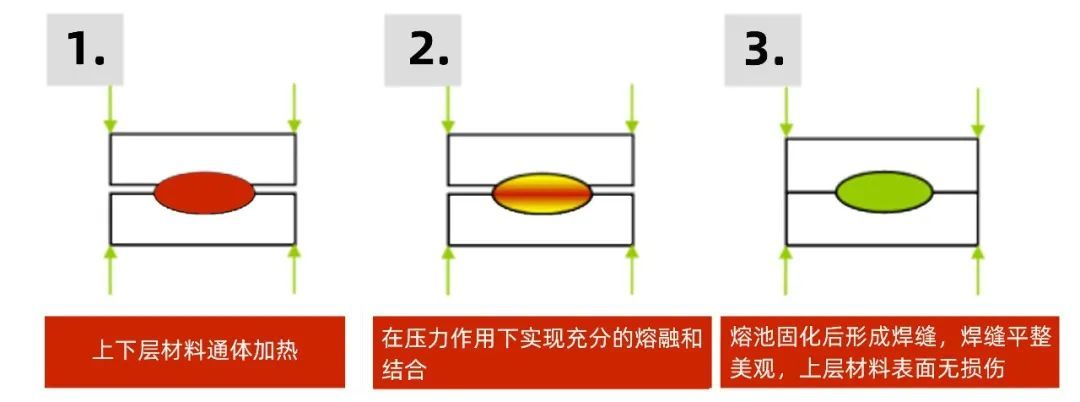
Schematic diagram of 980nm laser transmission welding principle
Common welding light sources are 808nm and 980nm semiconductor lasers, but transparent plastics have very low absorption rates for these laser wavelengths, only 5-10%, Transparent and white plastics require high absorption rates in many welding applications, which has led to the development of 1710nm semiconductor lasers. 。
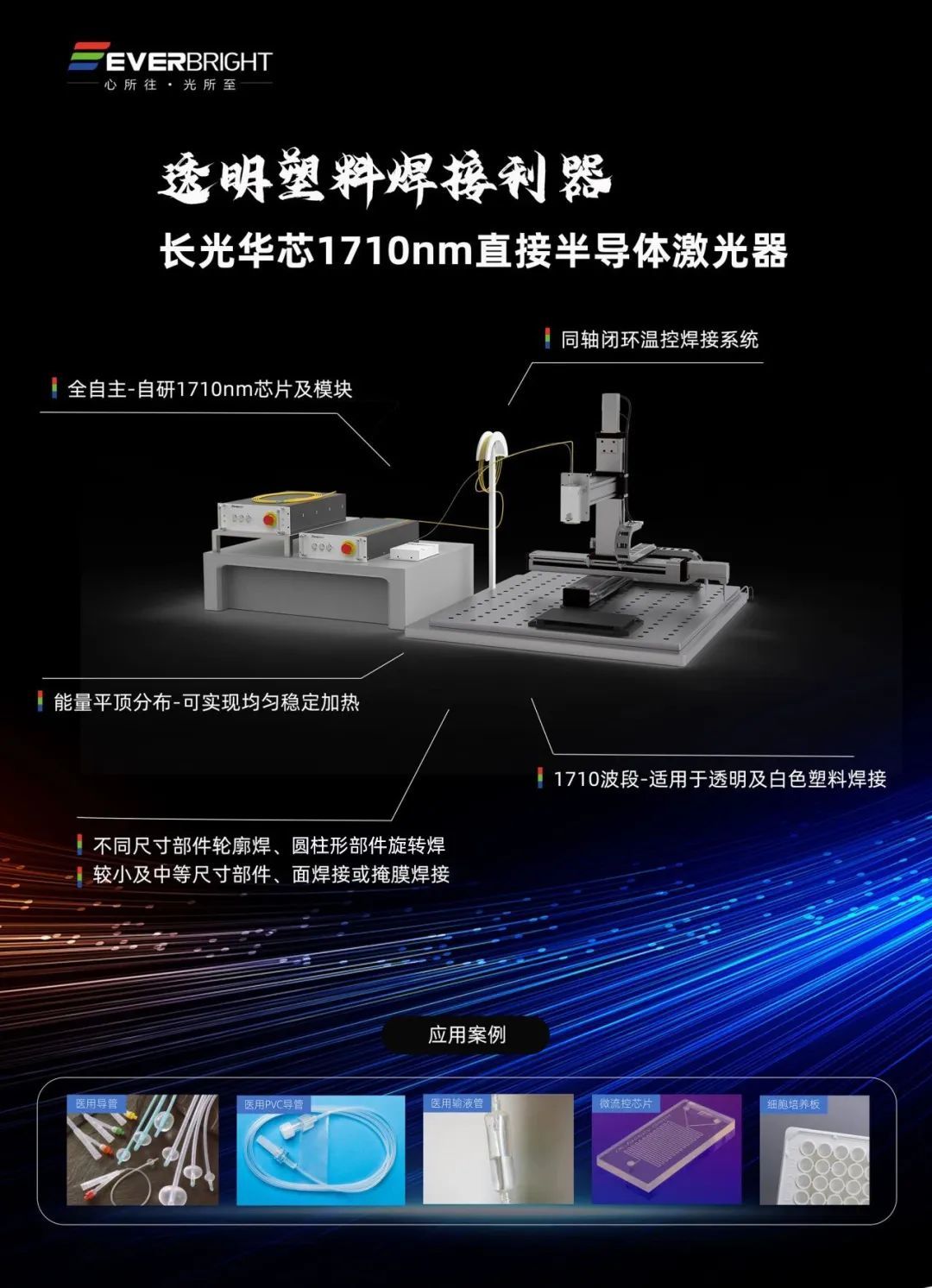
Fully independent product - using self-developed 1710nm chips and modules
The wavelength of semiconductor lasers is determined by the compound semiconductor materials used. Changguang Huaxin focuses on the research and production of semiconductor materials based on gallium arsenide, indium phosphide, and gallium nitride.
Indium phosphide semiconductor lasers cover the 900-2000nm wavelength range, targeting the market demand for transparent/white plastic welding, Based on self-developed 1710nm chips and modules, Changguang Huaxin has developed a fully independent 1710nm direct semiconductor laser based on indium phosphide material. 。
1710nm - suitable for welding transparent and white plastics
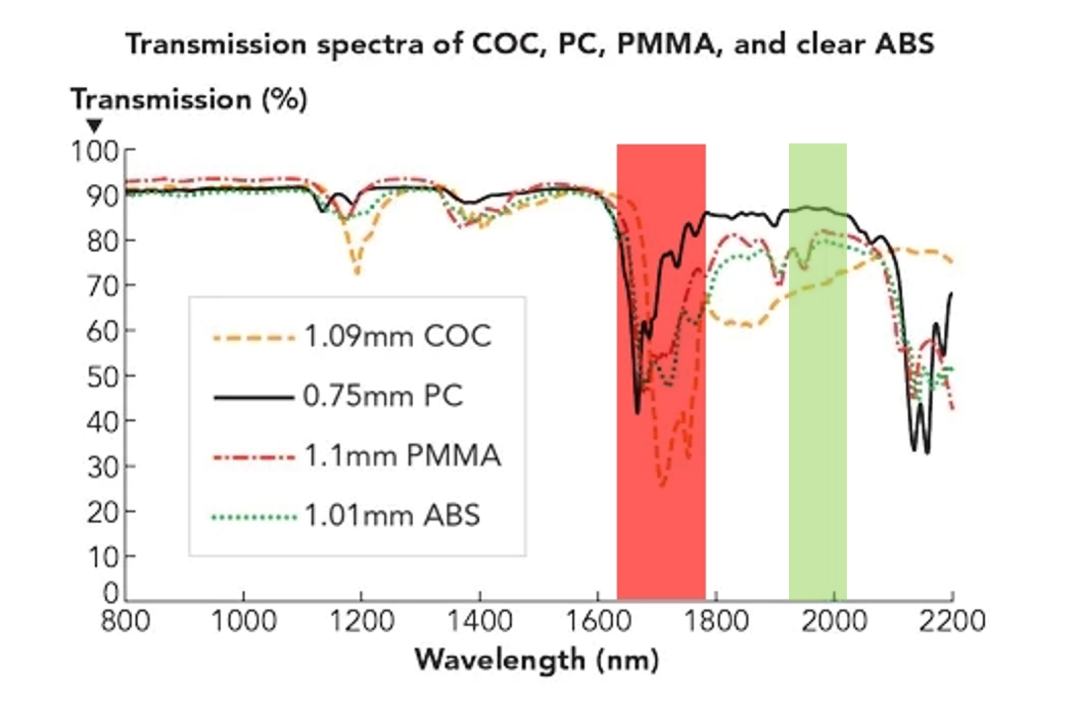
Transmission spectra of COC, PC, PMMA, and transparent ABS materials
Most transparent plastics have absorption peaks near the 1710nm wavelength band. At the 1710nm and 2000nm laser wavelengths, transparent materials such as PMMA and PC have low transmittance and high laser absorption rates up to 70%, Laser absorption rate is closely related to welding efficiency and welding quality.
High absorption rates allow lasers around 1710nm or 2000nm to directly weld transparent plastic materials:
1710nm direct laser welding
1. Heating of both upper and lower layers of material throughout
2. Achieving full melting and bonding under pressure
3. Formation of weld seam after molten pool solidifies, The weld seam is smooth and aesthetically pleasing, with no damage to the surface of the upper material.

Absorption rates of different materials at 976/1064/1710/1940 wavelength bands
Transparent plastics have better absorption of 1710nm laser than 1940nm fiber lasers, and the output power of 1710nm lasers does not need to be at least 100W like 808nm and 980nm lasers, Generally, only tens of watts of optical power are sufficient for most applications. Lower power means lower laser usage cost, smaller size, and stronger practicality.
1710nm transparent plastic welding subsystem
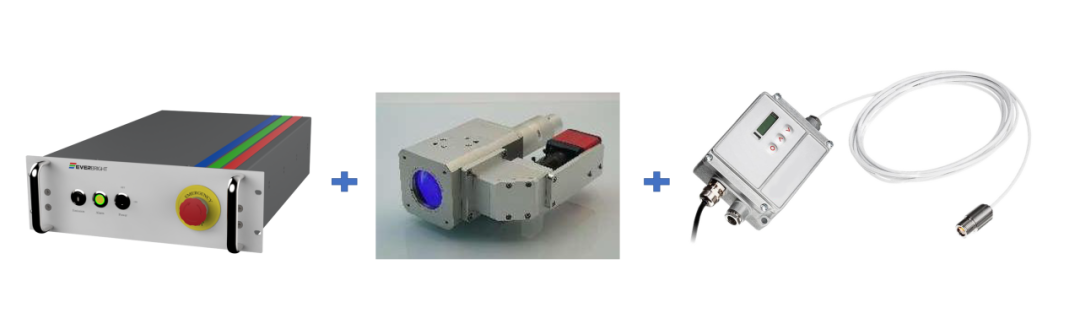
Contour welding: 1710 direct semiconductor laser + 1710 focusing collimator + temperature control system
Application directions: Contour welding of parts of different sizes
Process control: Temperature control
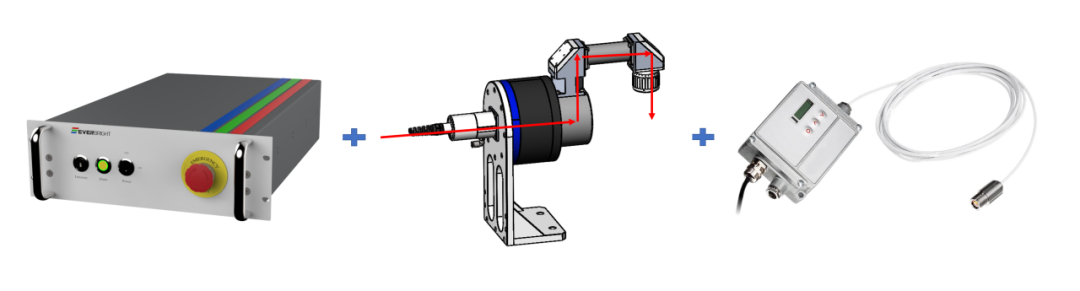
Rotary welding: 1710 direct semiconductor laser + 1710 rotary welding head + temperature control system
Application directions: Cylindrical parts not suitable for rotation
Process control: Temperature control
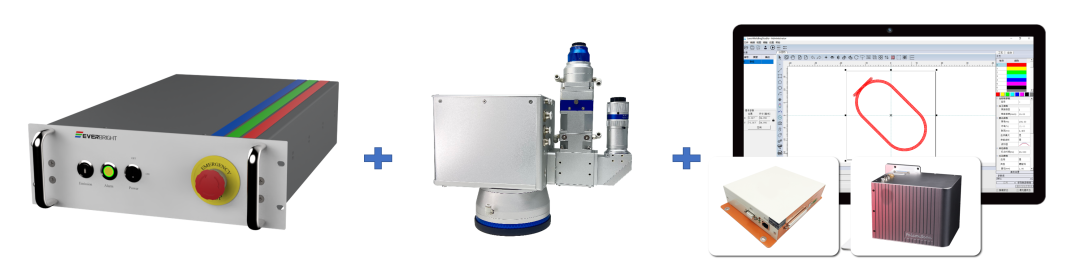
Quasi-synchronous welding: 1710 direct semiconductor laser + 1710 galvanometer + control system
Application directions: Small and medium-sized parts
Process control: Melt depth control
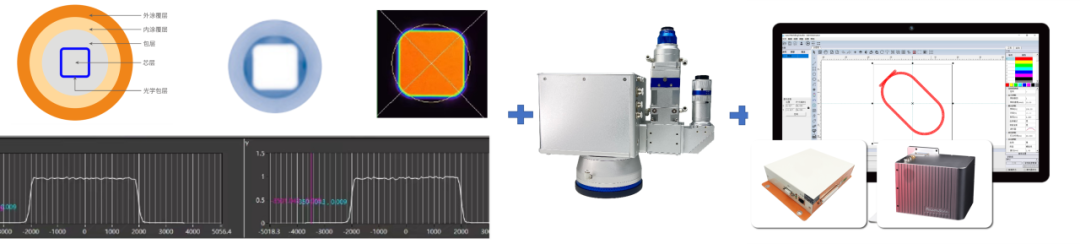
Surface welding or mask welding: 1710 direct semiconductor laser (homogenized square spot) + 1710 galvanometer + control system

Surface welding or mask welding: 1710 direct semiconductor laser + 1710 strip spot shaping head + temperature control system
Closed-loop quality control of laser plastic welding
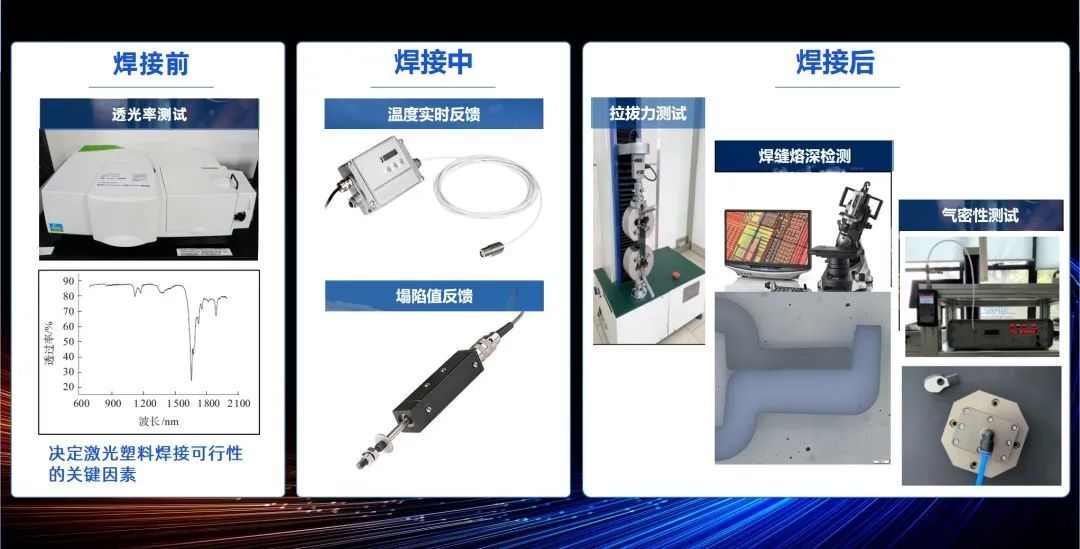
Changguang Huaxin conducts full-process quality control for plastic welding, performing transmittance testing before welding to ensure material feasibility, real-time temperature feedback and collapse value feedback during welding to strictly control temperature and collapse conditions, ensuring aesthetic results. After welding, pull strength testing, weld depth detection, and airtightness testing are conducted to ensure the performance of the processed products.
Recommended Reading

Address: No.56,Lijiang Road,SND,Suzhou,Jiangsu Province,P.R.China
Mailbox:sales@everbrightphotonics.com
Website:www.everbrightphotonics.com
Phone:+86 0512-66896988
Fax:+86 0512-66806323
Message Board